Criticism as a Sacred Practice

I’m both fascinated by and a bit scared of cultural criticism. The seemingly inevitable result of claiming to be a critic is that one has to exile oneself from a creative community in order to discuss it from afar. But there is an emerging transformation in cultural criticism. There is an understanding that every review is autobiography. That a critic is not regarded as a mere parasite who is “useless and dangerous”, but an essential service in a world with endlessly available and streamable culture. The critic is a vital connection point: one who connects with the work, connects the work to other works and connects a potential audience to the work. 

For someone who loves culture, who perhaps wants to slow down from solely consuming creative work after work, I want to suggest that cultural criticism can be a kind of personal sacred practice of deeply appreciating works and exploring their layers of meaning and how it can connect and inspire one’s life. 

I’m thinking about what this would look like in real life and immediately think of two podcasts I’ve been listening to ritually lately that represent this new way of engaging with cultural criticism. I don’t even know if these critics would self identify as “cultural critics” – more like cultural lovers or cultural guides pathfinding and pointing out the sites of note for the interested audience who follow them into new territory. 

The first is the podcast Poetry Unbound from Onbeing Studios, a fifteen minute immersion into a single poem. Padraig O Tuama unhurriedly guides the listener through the poem, firstly reading it through with his melodious Irish lilt, and then drawing out the poem’s components, pointing out connections and perspectives, and finally ending the episode by reading the poem through one last time. This second read through at the end is key to the experience. After all Tuama’s intricately woven connections and invitations for discussion and thought, the poem feels freshly illuminated through the reading. It shows the potential for literary criticism as an opportunity for a critic to lead an initial experience of a work by exploring the technical components before presenting the completed work, similar to the Song Exploder podcast format, where Hrishikesh Hirway hosts a songwriter who takes their song apart piece by piece before listening to the song as a whole. Both podcasts give the listener the experience of slowing down time, appreciating a work with a meditative magnifying glass, and one can feel one’s soul expanding through this dismantling and reconstructing process. 

The podcast Harry Potter and the Sacred Text from Not Sorry Productions offers a similar sense of experiencing a work through the rituals of cultural criticism, this time by engaging with each chapter of Harry Potter through various sacred text practices which opens up the text as a vehicle for reflecting on one’s life, struggles and questions. This approach expands spiritual practice to apply to any text, not just designated texts from religious traditions. It is very deliberately shaped around the reader’s personal response rather than literal discussions about the technicalities of the world that the author-that-shall-not-be-named has created. The text becomes a tool to unpack meaning in a way that connects with and 

Inspired by these podcasts I’ve been thinking about how I can use cultural criticism to enrich my experience of music, podcasts, TV, film, books. How I can describe pathways of understanding myself and the world through the work and find levels of meaning like an archeologist sifting through sands. 

What this criticism as sacred practice could look like:

  1. Describe what is there. What is the intended meaning/literal meaning of the work?
  2. Describe the history of the work and the place of it in the author’s life. How does this become relevant in the cultural landscape, in our own lives at this moment.
  3. What are the symbolic connections? What do these symbols remind us of in our own lives? How do these symbols connect in our own lives?
  4. Can we trace these symbols through the cultural canon or similar works? What threads can we follow that can enrich our understanding and appreciation of the work at hand?
  5. What might the message be, what is the invitation of the work for changing our perspective or our actions? What might we be inspired to create ourselves in response?
Just play a perfect ‘A’

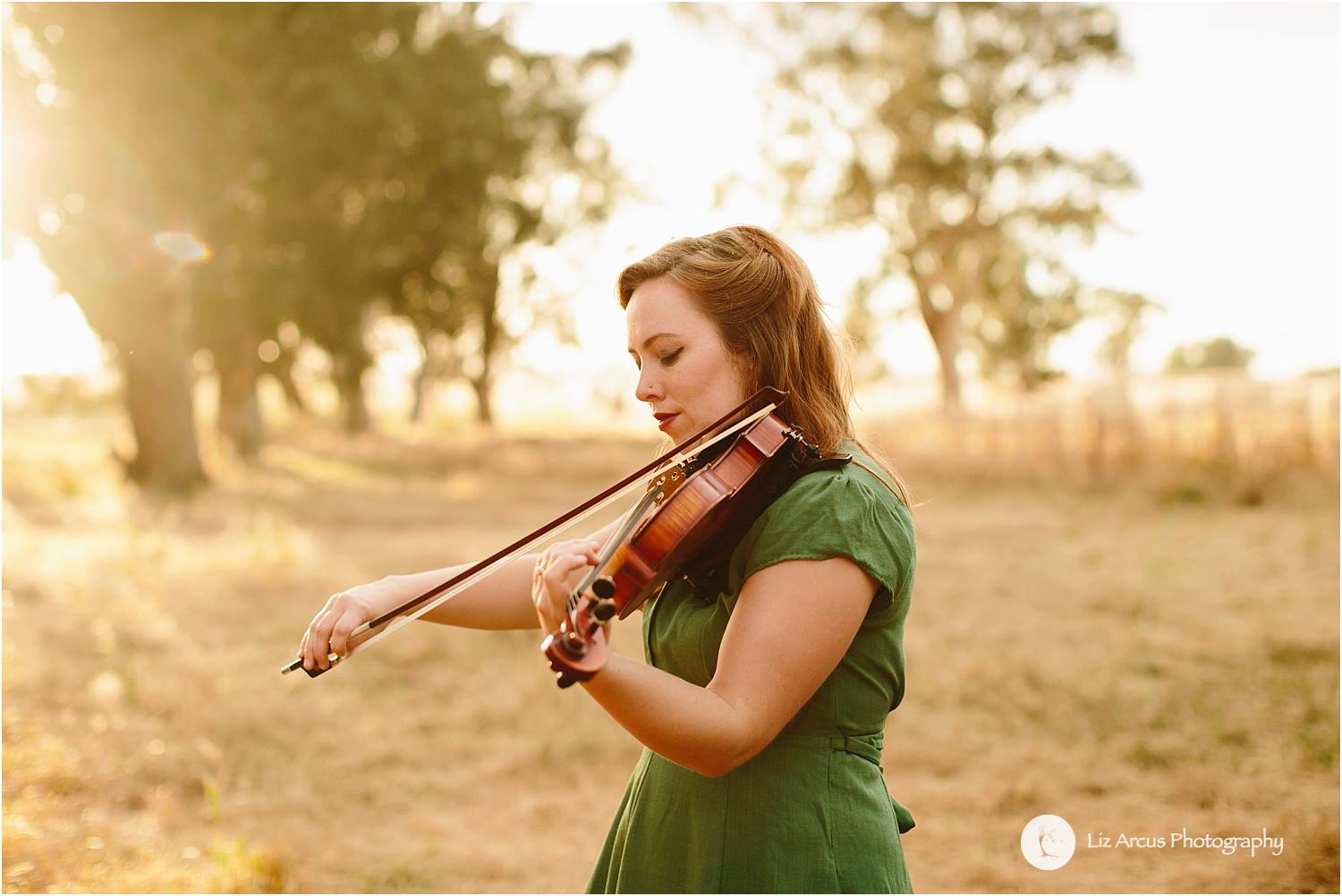
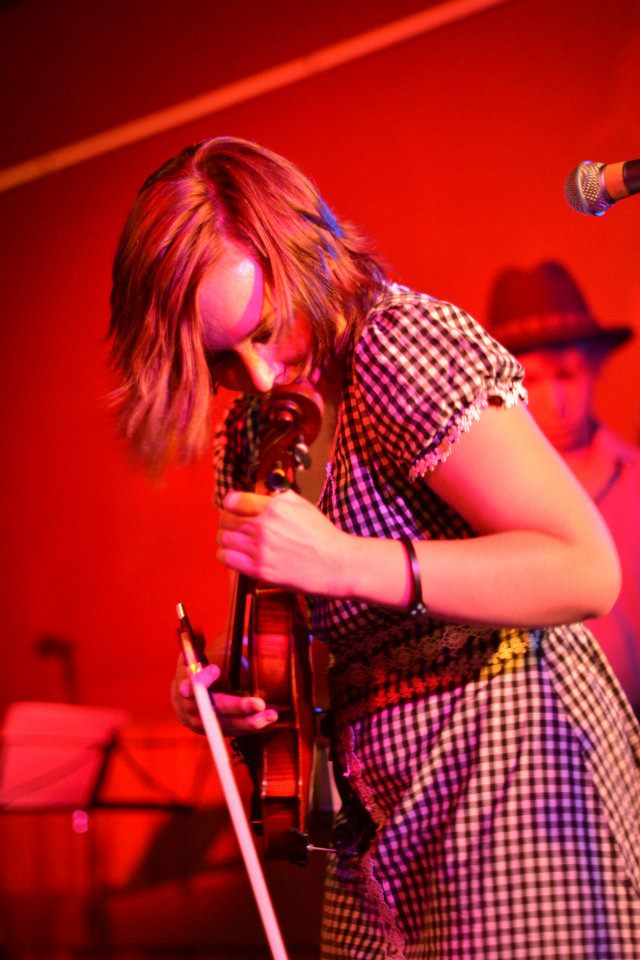
It was my second week of the Bachelor of Music. I had just moved from my tiny town of one hundred people to the “big smoke” to learn classical violin at the Melbourne Conservatorium of Music.

I was so out of my depth.

I had been assigned a French violin teacher and was currently shocking him with my inepititude. He saw his job as tearing apart my technique to rebuild it strictly and precisely. I was in full-time questioning-my-identity-and-everything-about-the-world mode.

“What do you think of when you look at these notes” he flourished his hand across the first movement of the Bruch violin concerto.

“Ummmm…the colour orange?”

His eyes widened with alarm, eyebrows shot in a violently vertical direction.

But it got worse. We started with the note ‘A’. I would start playing it and he would shake his head. No. Wrong. Do it again. Angle your bow. Tap your first finger. Don’t hold your breath. Don’t land the bow that way. I was getting more and more frustrated, a tangled writhing mind of what I had read in the news, faces I had seen, facts and feelings.

“What’s the point of this!” I exlaimed, “What’s the point of playing a perfect A?!”

I was thinking about the homeless folks bunking in on Elizabeth Street, about the injustices the world of suffering and pain and the fights for social justice. I didn’t believe in this ‘A’. I couldn’t see the point of perfecting a sound. I wasn’t sure if I believed in perfection and certainly didn’t believe I was capable of it.

French teacher looked aghast.

Looking back I’m also slightly aghast at my brutal honest outburst but am still thinking about what the point of a perfect A is.

I have some thoughts for nineteen year old Erin, ten years later:

The point of perfecting that ‘A’ is so you can then play every other ‘A’ perfectly. And by perfect I mean completely controlled, a tool fashioned perfectly to your will. If you can shape this ‘A’, and every ‘A ‘after it, then you have developed the skill to shape every other note you every need to play. One perfect ‘A’ encapsulates the whole scope and range of musical expression.

The struggle with a private teacher is that you’re trying to fashion your ‘A’ to their ideas of perfection. It feels like guess work; trials and errors. It feels arbitary and a losing game. But through this process you learn control, and one day when you’re not controlled by exams and panels of critics judging your musical merits, you will be able to envision the music you want to play and pick up these tools of perfect ‘A’s to express the music in your heart and mind.

I start my practice every day finding my perfect ‘A’. Once I find it, I’m ready to create everything else from it.

Fiddle Workshop Free PDF: 7 Ways to Practise a Fiddle Tune

“Think ten times and play once” Franz Lizst

I have completely rethought everything I ever thought about practice.

Becoming obsessed with fiddle music from Old Time, Bluegrass and Scottish traditions I have been exploring ways of “getting inside” a piece of music. Fiddle tunes may seem simple to someone sightreading the 16 bars of quavers from a book of tunes. But reading notes and expressing musicality are totally different things. These notes are a starting point for something individually expressive and creative. Just listen to what someone like Darol Anger or Chris Thile do with a simple fiddle tune, or how Heifetz was famous for not picking up a piece of sheet music before he had it memorised.

So I’m working on an “ultimate way to learn a fiddle tune”, synthesising things I’ve learned on fiddle camps, read in jazz improvisation books and explored myself in the practice room.

I’m presenting this for the first time tomorrow, leading a fiddle workshop at 1pm in the Newport Scout Hall for the Newport Folk Festival.

But for you dear blog readers, I have provided a link to the PDF I’ll be basing the workshop on with all my hints, tips and apps. Plus I’ve attached my simple transcription of the Bill Monroe tune Old Ebenezer which we’ll be applying all these ideas to in the workshop.

Enjoy!

7 WAYS TO PRACTISE A FIDDLE TUNE

Old Ebeneezer (1)

erinheycoxviolin.jpg

What is Creative Strings?


398491_10150560147109644_536799643_8650497_1383750012_n You play a piece. Note for note accurately playing exactly what’s on the page. Recreating notes penned hundreds of years ago.

You play a piece. You linger a little on the last note. You add in a few notes to embellish the turnaround. You decide you want the middle section to sound more like a dance so rearrange the accents to a 5/4 feel. Because you’re playing this piece without its usual piano accompaniment you underscore the melody with some double stops to create a more complex harmony. The recapitulation sounds a little boring to you so you take the main idea of the melody and start to improvise on it, starting simply and evolving it to something completely original to finish the piece off. Mozart penned these notes hundreds of years ago but now it’s been infused with your context, your personality, your own sound.

What is “creative strings” or “alternative strings”?

It’s the idea of turning away from what’s written on the page. It’s turning away from a formal mindset bent on nothing but accuracy and moving towards a more creative attitude of playing music. This is not to say less talented, less accurate, sloppy playing. Thought and musicality must go hand in hand.

Creative strings involves composing, arranging, improvising and collaborating with other musicians or artists in other medium (video artists, dancers, actors). It’s taking our various string instruments out of their boxes and claiming their artistic merits as not just a cog in the orchestra machine or for only the privileged few with enough training and opportunity to play traditional concertos. It’s claiming the violin as your own individual voice no matter what level of skill you’re up to.

It’s about engaging with the music of your culture. It’s about engaging in the music of other cultures. It’s widening our scope of what we listen to, of what we think we can perform and create, of how we think about music.

It’s knowing how to approach any musical situation you come across – not just situations where there happens to be sheet music to follow!

Is there such thing as contemporary violin? What would this look like? What would whole communities of contemporary violinists offer to the world? Where are the jam circles, forums, the sharing of transcriptions and passionate engagement with music?

Most traditional pedagogy is focused around the goal of training for an exam. Which I really liked to do but I also liked to improvise, play in rock bands, listen to world music, learn fiddle tunes from around the world and create my own music. But these were all things I worked out for myself and felt a bit of a loner in – I didn’t feel there was a string community that was supportive of my goals beyond win this audition, ace this exam. In fact that often screwed up their noses when I would add in a slide, or say I enjoyed playing gypsy music or played in a folk rock band.

It could be a pedagogy about not just playing this note and play it right, but exploring your instrument and music as a whole. Perhaps this would excite more people to take up an instrument and continue playing beyond high school.

So it’s my mission to both become a complete musician, with good technique on my instrument used as a tool box for further creative expression and to teach others to do the same.

Don’t freak out if classical music is all you’ve known. Let’s keep doing our Kreutzer studies but also study the most common chord progressions so we can participate in a jam session.  I don’t think participating in the creative side of music will detract from playing our concertos but rather improve it. Since I’ve been delving into some harmonic study, sight reading orchestra repertoire has become easier as I can see the patterns of the way the music is constructed. My pieces take on freshness as I approach them. And it saves me when I’m playing a wedding gig and run out of repertoire, so I improvise on some Disney ballads (which get the biggest reaction of the whole set). Again I say – let’s take away the limits!

I am not advocating dismissing traditional pedagogy entirely but rather opening it out. I think this will get more people interested in playing string instruments – they will feel like they can create meaningful music even if they haven’t been playing since they were six. Creating more meaningful music at all stages of learning an instrument.

The way I see it is that immortality as a musician is in both creating new music and teaching others.


GREAT LINKS FOR FURTHER DISCUSSION ON THE IDEA OF CREATIVE/ALTERNATIVE STRINGS

  • Christian Howes is a giant among contemporary jazz violin, especially in creative strings pedagogy. In fact he has created the ‘Creative Strings Academy‘ where you can sign up for with videos, books and instruction that guides you along the process (first month is free so nothing to lose in having a look – I’ve certainly learnt a lot!) The blog is also excellent with many ideas on how to start flexing your creative muscle in string playing.
  • Mark O’Connor has developed an entire method incorporating folk and improvisation into beginner violin pedagogy. He talks of a past where the violin-composer was at the forefront of contemporary music and laments the current state in ‘How Violinists Got Less Creative’
  • A group of guys in Los Angeles have put together ‘String Project’ have built classes focusing on whatever style kids want to learn and create in from Beatles to hip hop. Very cool!
  • On the board of the International Society for Improvised Music, La Donna Smith has a lengthy but interesting article about how we need creativity in music education, especially with its power to cross cultural boundaries.

Creating a musical culture in your home (Even if you feel like you don’t know much about music)

My brother as a young cellist at a music camp

My brother as a young cellist at a music camp

Have the radio on. Try listening to different stations and genres as opposed to Top 40 all the time.

Listen the soundtracks of your kids favourite movies (often there will be some orchestra involved). Talk about how the instruments create the mood of the piece.

Go see some live music: there are often free orchestra concerts (especially in the summer), see some chamber music or world music. Help your kid find their favourite performer on their instrument (a violin hero you always see when they’re in town)

Make some music friends:

–          Have a friend over who’s learning an instrument and muck around on your instruments together or learn a duet.

–          Get involved in a youth orchestra or string ensembles/concert band.

–          One of the most encouraging things for me growing up was going to music camps where I would meet a whole lot of people who were weird music kids just like me. The tutors were cool too and taught me from a different angle from what my violin teacher would.  Having friends who are into music will encourage your kid along like nothing else!

Music encouraging birthday or Christmas presents:

–          Sheet music (even better, make a trip to the music store and spend some time looking through the sheet music section),

–          CD’s,

–          Concert DVDs,

–          Tickets for concerts,

–          Music nerd t-shirts,

–          Fun instruments or instrument accessories.

Youtube the latest piece your child has been working on – look at a few different versions together and choose which one is your favourite!

Celebrate all sorts of music milestones:

–          Get a new dress to play for the recital,

–          Go out to the special bakery after a music exam,

–          Buy a small gift (like a CD) after doing an audition (those things are hard on the psyche!)

I remember my Mum gave me fifty dollars as a celebration of me learning ‘Meditation’ on the violin – it was my first “real” piece and I worked hard to memorise it. Learning an instrument can be tough work – create a culture where music is the thing that makes you feel special and your kid will never want to give up.

Go busking for charity (even more fun with friends and siblings)

Play at a nursing home (its ok, most of them are deaf)

Give money to buskers; ask them about how and why they learnt their instrument.

Mum/Dad’s/Grandparent’s birthday coming up? Get your kids to sneakily work out their favourite piece and learn it. Or write their own piece for them.

Fun bribes! My second cousins play violin and cello and when their grandfather said he’d give twenty dollars to whoever could learn how to play Amazing Grace first on their instrument it sparked a practice frenzy! Dare your kid to work out how to play their favourite song on their instrument.

Learn how to play the Brahms lullaby for a new baby brother/sister/cousin/neighbour

Learn how to play Happy Birthday – have everyone bring out the instruments as a family tradition to play celebrate birthdays (agree on a key first!)

If you go to church start getting involved in the music team – my husband had older musicians mentor him as he started out playing drums at his church. You won’t find a more forgiving environment!

Start a collection of all the songs they know so they have a go to book of “repertoire”. Scrapbook recital programmes, concert tickets. Make a music diary.

Learn some carols together to play for the family on Christmas (reminds me of the final scene of It’s a Wonderful Life’ where the little girl plays Harks the Herald Angels sing over and over and over and over)

A Violin Bucket List

I finished my Bachelor of Music halfway through this year. Since I was eight I’ve always had something to practice towards – all the AMEB exams, recitals, university exams and concerts. And now…it feels a bit like a free fall, especially as I’m not having lessons at the moment.

I want to keep growing, developing, exploring on my violin. But it can feel difficult when there are no clear markers to aim at.

So here’s a bucket list of various goals that go beyond what I’ve learnt on violin so far. They’re challenging enough to really develop as a creative and brave musician even without lessons!

  • Memorise a flashy fiddle tune – could be bluegrass, celtic or gypsy music. Something to show off at a party!
  • Learn ALL  42 of the Kreutzer studies and exactly what each one aims to teach. Think of some creative variations one could use to teach the same things.
  • Learn an entire Bach sonata or partita – all the movements (I’ve just got a Gigue to learn to have all of the G minor sonata!)
  • Pick a favourite concerto and learn all the movements (I don’t think I’m the only one who went through my entire undergrad only learning bits and pieces of concertos). Have a go at making up your own cadenza.
  • Using a loop pedal work out the bass, groove, harmony and melody of a classic pop/rock song. Layer up and record to Youtube.
  • Learn three songs from your cultural background. Arrange them three different ways for a beginner, intermediate and advanced players.
  • Learn something in scordatura! (Alternative tunings: there are fiddle pieces and baroque pieces that use scordatura)
  • Transcribe a solo from a recording you like. Transcribe a solo originally played by your instrument or try transcribing a solo from another instrument.
  • Write your own instrumental – you could try a theme and variations. Pick a theme that you like, or invent your own theme.
  • Listen to a 20th century/21st century composition written for your instrument. What’s something new about the way they use your instrument? Research any new techniques you hear them do (borrow the score from a library, read the liner notes etc) and work out how to play them yourself (perhaps add to theme and variations)

Have fun!

How do you challenge yourself to keep learning and developing?  Share your ideas in the comments section!

The Anatomy of Practice: Several Ideas

If you have five minutes…

Find a mirror

2 minutes: Practice some technique in the mirror: for string players long bows making sure your bow is straight, your pinky is curled and you’re holding the violin up without tension. For wind and brass players this could mean long tones.

3 minutes: Practice a scale to a metronome with a few different rhythms.

(For advanced string players I’d jump straight into practicing thirds as it’s like practicing two scales in one. For intermediate/beginner string players practice with two beats to a bow, one beat to a bow, two bows to a beat, four bows to a beat.)

If you have ten minutes

Find a mirror

2 minutes: Practice some technique in the mirror (see above)

3 minutes: Practice a scale to a metronome with a few different rhythms (see above)

2 minutes: Practice the arpeggios of four different chords: major, minor, dominant seventh, diminished seventh. Up and down. All their inversions.

2 minutes: Pick a piece. Locate the hardest part of it. Is this a rhythmic, intonation or expression issue? Practice accordingly (here’s some articles that go into more detail)

3 minutes: Run through the piece (or a section of if it’s a long piece)

If you have twenty minutes

Find a mirror

2 minutes: Practice some technique in the mirror (see above)

3 minutes: Practice a scale to a metronome with a few different rhythms (see above)

5 minutes: Pick a piece. Locate the hardest part of it. Is this a rhythmic, intonation or expression issue? Practice accordingly (here’s some articles that go into more detail)

5 minutes: How does the piece end? Memorise the ending by clapping, singing, miming playing (more info on that here)

5 minutes: How does the piece start? Memorise the beginning by clapping, singing, miming and playing.

You can build something valuable even with a small amount of time – if done on a consistent basis. So no excuses for picking up your instrument and playing music every day!

A Violin Set Up Poem

“There’s too many things to remember!” Kids often whinge when they’re learning violin. I think that there’s really two major points that fix a lot of elementary violin problems:

  • A “mouse-hole” (a circle of space between the thumb and first finger of the left hand) ensures the left hand is in the right position and is relaxed enough for the fingers to fall in a natural way.
  • Making sure the pinky is bent in the bow hold; it should sit on top of the flat part of the bow. This enables the bow to be straight, for there to be smooth changes and greater relaxation and control .

This week I’ve asked all the kids to memorise a little ditty I invented. I am going to be completely annoying and recite it to them every time they pick up the violin to play. Because for good habits to be installed a system check is in order!


Here’s the poem:


Violin up

Swing your elbow

Place your fingers

So they’re ready to go


Check your mouse-hole

Park your bow

Tap your pinky

And you’re ready to go!

Call and Response

CALL AND RESPONSE

Players: Two or more

Time: 5 minutes

Ability: All  – depending on the complexity of the phrases used

Age: All – especially good for older students.

This is a bit more challenging as it not firstly develops aural skills (in being able to copy a phrase) and then improvising skills (in varying the phrase).  But remember you can start simply and build up to Charlie Parker level complexity.

As the group leader play a passage and have another answer by copying the passage as close as they can.

–          For beginners: Play a phrase just on one note with a rhythm. Always let them know the note you’re starting on.

–          For more advanced: You can play an extended passage

Now play the passage again and see if they can vary one note of it.

Try two notes

Play the passage again and see if the other person can start off copying the first half of the phrase and then finish off with entirely different notes.

Respond with the second half of the phrase and then add in your own second half.


So now the student has options they can use with their ‘response’:

–          They can play it exactly

–          They can vary it with only a few notes

–          They can take it to an entirely different place


Variations:

–          Play the response note for note but with entirely different rhythms

–          Try transposing the response up by one, two, three etc notes. See what different effects each interval has.

–          If the call is in a major key, answer with the relevant minor key and visa versa

–          Try playing a response in the dominant of the key (you play a C major scale call? Have them response with G major)

Dramatic Dialogues

DRAMATIC DIALOGUES

Players: Best with two, could modify for a group

Time: 5 minutes

Ability: All

Age: All

Now that you have gotten used having a musical conversation and have realised with excitement that it can be just as easy as having a normal conversation it’s time to add some emotion!

Like the Sentence Game, begin by using words and then move to music notes.

Say you’re going to start by taking it in turns saying sentences to each other. This should not take long to get the hang of – don’t spend too long on this step.

Now say music sentences to each other, pretend you’re having a conversation.

Vary the types of conversations you have:

For example:

–          Two friends who haven’t seen each other for ages

–          A teacher yelling at a student

–          A musical fight!

–          A conversation where one instrument has to woo the other

Another variation is to challenge one another with an emotion each turn.

For instance I ask for a “bubbly” sentence, and then when it’s my turn the student can ask for a different emotion (maybe “lazy”)

Variations:

  • Pick two moods and have one transform into the other (e.g. from frightened to peaceful)
  • Add some theory by asking why certain musical ideas create certain emotions: “What about the rhythm makes this sound happy?” “Why does this melody sound sad?” etc

Group Variation:

MUSICAL CHARADES

You could modify this for a group setting like a musical improv version of charades!

Have two or three people get up and have a ‘conversation’ with their instruments under a different theme.

See if the audience (the rest of the class) can guess the emotion or the different characters involved.

NEXT: CALL AND RESPONSE