Reflecting on Live TV Graphics

REFLECTIONS ON RUNNING A GRAPHICS PROGRAM FOR LIVE TELEVISION

It had never crossed my mind to consider how tv shows got their boxes of text flashing on the lower half of their programs, it always so seamless. Well Now I know exactly how it feels to be the person operating the graphics, it’s a flurry of typing, dragging and clicking timed to the very last nano second. It’s one of those jobs that no one notices when it’s going well, but is glaring obvious when you muck it up – mistype something, or load the wrong music video.

I was able to shadow previous graphics operator for one of the shows and through close observation was able to suggest a few things to help her. She was quite young and had a bit of “superstitious” thinking – not thinking through the reasons that something may work or not work, but claiming things without questioning it. But it meant that if something went wrong she wasn’t able to fix it and would often freak out and freeze on the job. I never thought I was particularly good at technology but I convinced the producer I was a “technical whiz” just by realising that you can work out most things by logically thinking about it (which kind of excited me).

So it’s fast paced and you have to make decisions in split seconds so you always have to think ahead, but that makes the hour long show fly fast (you don’t see much, but you can always catch up later with the podcast, such as the one here which you can see for yourself…)

KEY SKILLS

  •   Basic photoshop skills
  •   Operating a graphics
  •   Prioritizing many competing tasks that require immediate attention
  •   Following technical directions
  •   IT Problem solving
  •   Working to a precisely timed schedule
  •   Keeping a cool head under pressured situations.
  •   Attention to detail
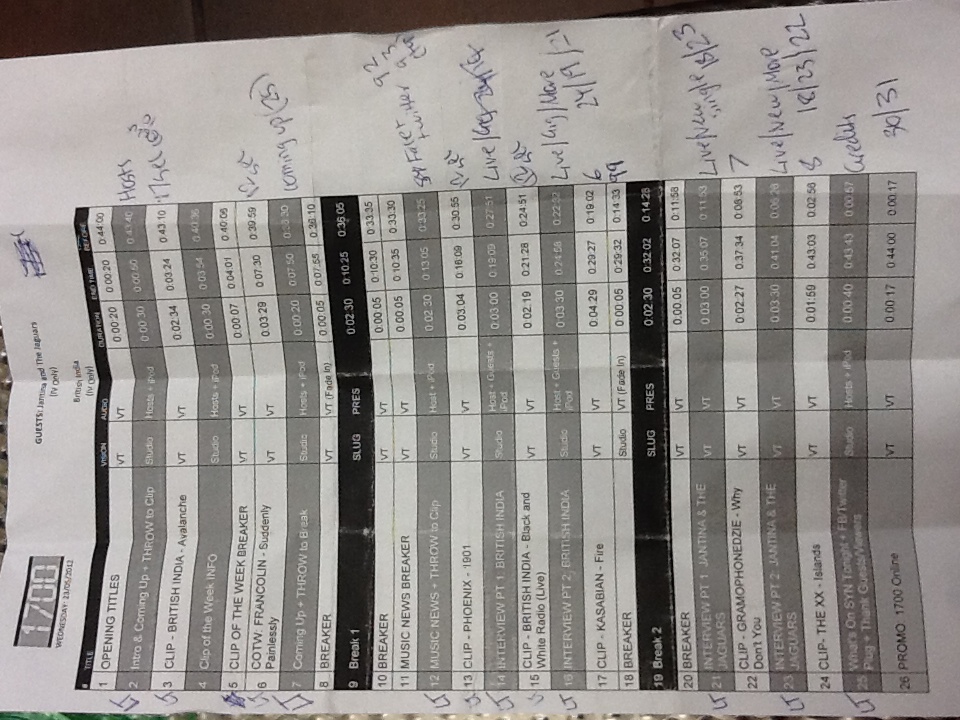
  • Following a run sheet. Like this one:
  •   

Reflections on Crewing at 1700

REFLECTION ON CREWING AT 1700

On my first day of placement at SYN, I was sent straight to the Channel 31 studios, was introduced to the team made up of an executive producer, producer, two hosts and several other bodies to fulfil the rest of the crew – a director, audio guy, graphics operator, vision switcher, floor manager and the camera operators. Before this day I had no idea what roles were required to produce an hour long tv show, but this was precisely why I opted to do my placement at SYN: to gain an insight to the mediums of radio and television. As a music student it seemed important to me (and interesting) to learn hands on about the mediums through which most people experience music, to be able to imagine ways to contextualising great content in a form accessible to people of all walks of life.

After using the brawn I had to help put together the sets, I was told I would be operating the cameras for the show. The floor manager for the day gave me brief run down on how to operate the expensive looking equipment on wheels (a dolly) and before I could reflect on my lack of experience, we were live, on air, and every time the red light glowed on my camera it meant that it was through my lens the thousands of people watching were viewing the action. It was fun, I liked being able to frame interesting and good looking shots – compensating for the height difference between the hosts, filming the instruments of the band who were performing live In the studio, following the director’s feedback through my headphones to reduce the “head space” and a get a “mid shot.”

The next week I graduated to floor manager, which meant teaching the other new camera operators how to focus their lens and line up their shots (that’s how SYN works, you learn quickly on the job, and in no time you’re showing others the ropes). I had the additional responsibility of counting down to when the show would be live with the code of hand signals.

It’s a role that is primarily based on effectively carrying out orders to produce another’s artistic vision but that doesn’t mean that there isn’t room for some creative intuition as well, as the director doesn’t spell out every shot that you should do. So you need to be on your toes, making sure your lenses are focused and being aware of how the scene is changing.

KEY SKILLS

  •   Clearly communicating directions from director to others.
  •   Camera operation skills: framing effective shots
  •   Learning quickly on the job and under pressure
  •   Teamwork: ensuring knows what their role is and is empowered to carry it out
  •   Eye for detail, knowing when to use one’s intuition