What is Creative Strings?


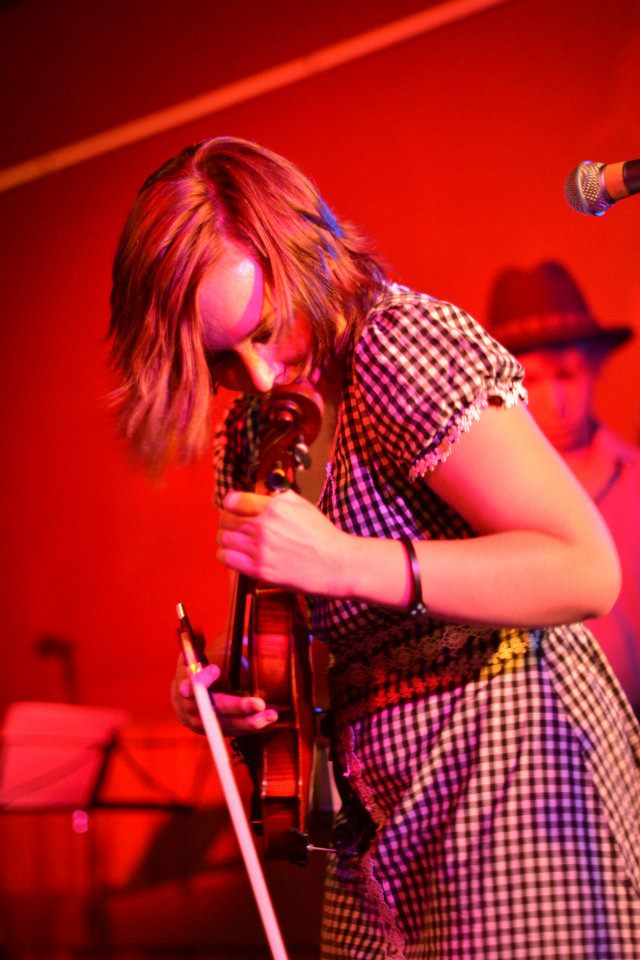
398491_10150560147109644_536799643_8650497_1383750012_n You play a piece. Note for note accurately playing exactly what’s on the page. Recreating notes penned hundreds of years ago.

You play a piece. You linger a little on the last note. You add in a few notes to embellish the turnaround. You decide you want the middle section to sound more like a dance so rearrange the accents to a 5/4 feel. Because you’re playing this piece without its usual piano accompaniment you underscore the melody with some double stops to create a more complex harmony. The recapitulation sounds a little boring to you so you take the main idea of the melody and start to improvise on it, starting simply and evolving it to something completely original to finish the piece off. Mozart penned these notes hundreds of years ago but now it’s been infused with your context, your personality, your own sound.

What is “creative strings” or “alternative strings”?

It’s the idea of turning away from what’s written on the page. It’s turning away from a formal mindset bent on nothing but accuracy and moving towards a more creative attitude of playing music. This is not to say less talented, less accurate, sloppy playing. Thought and musicality must go hand in hand.

Creative strings involves composing, arranging, improvising and collaborating with other musicians or artists in other medium (video artists, dancers, actors). It’s taking our various string instruments out of their boxes and claiming their artistic merits as not just a cog in the orchestra machine or for only the privileged few with enough training and opportunity to play traditional concertos. It’s claiming the violin as your own individual voice no matter what level of skill you’re up to.

It’s about engaging with the music of your culture. It’s about engaging in the music of other cultures. It’s widening our scope of what we listen to, of what we think we can perform and create, of how we think about music.

It’s knowing how to approach any musical situation you come across – not just situations where there happens to be sheet music to follow!

Is there such thing as contemporary violin? What would this look like? What would whole communities of contemporary violinists offer to the world? Where are the jam circles, forums, the sharing of transcriptions and passionate engagement with music?

Most traditional pedagogy is focused around the goal of training for an exam. Which I really liked to do but I also liked to improvise, play in rock bands, listen to world music, learn fiddle tunes from around the world and create my own music. But these were all things I worked out for myself and felt a bit of a loner in – I didn’t feel there was a string community that was supportive of my goals beyond win this audition, ace this exam. In fact that often screwed up their noses when I would add in a slide, or say I enjoyed playing gypsy music or played in a folk rock band.

It could be a pedagogy about not just playing this note and play it right, but exploring your instrument and music as a whole. Perhaps this would excite more people to take up an instrument and continue playing beyond high school.

So it’s my mission to both become a complete musician, with good technique on my instrument used as a tool box for further creative expression and to teach others to do the same.

Don’t freak out if classical music is all you’ve known. Let’s keep doing our Kreutzer studies but also study the most common chord progressions so we can participate in a jam session.  I don’t think participating in the creative side of music will detract from playing our concertos but rather improve it. Since I’ve been delving into some harmonic study, sight reading orchestra repertoire has become easier as I can see the patterns of the way the music is constructed. My pieces take on freshness as I approach them. And it saves me when I’m playing a wedding gig and run out of repertoire, so I improvise on some Disney ballads (which get the biggest reaction of the whole set). Again I say – let’s take away the limits!

I am not advocating dismissing traditional pedagogy entirely but rather opening it out. I think this will get more people interested in playing string instruments – they will feel like they can create meaningful music even if they haven’t been playing since they were six. Creating more meaningful music at all stages of learning an instrument.

The way I see it is that immortality as a musician is in both creating new music and teaching others.


GREAT LINKS FOR FURTHER DISCUSSION ON THE IDEA OF CREATIVE/ALTERNATIVE STRINGS

  • Christian Howes is a giant among contemporary jazz violin, especially in creative strings pedagogy. In fact he has created the ‘Creative Strings Academy‘ where you can sign up for with videos, books and instruction that guides you along the process (first month is free so nothing to lose in having a look – I’ve certainly learnt a lot!) The blog is also excellent with many ideas on how to start flexing your creative muscle in string playing.
  • Mark O’Connor has developed an entire method incorporating folk and improvisation into beginner violin pedagogy. He talks of a past where the violin-composer was at the forefront of contemporary music and laments the current state in ‘How Violinists Got Less Creative’
  • A group of guys in Los Angeles have put together ‘String Project’ have built classes focusing on whatever style kids want to learn and create in from Beatles to hip hop. Very cool!
  • On the board of the International Society for Improvised Music, La Donna Smith has a lengthy but interesting article about how we need creativity in music education, especially with its power to cross cultural boundaries.
Creating a musical culture in your home (Even if you feel like you don’t know much about music)

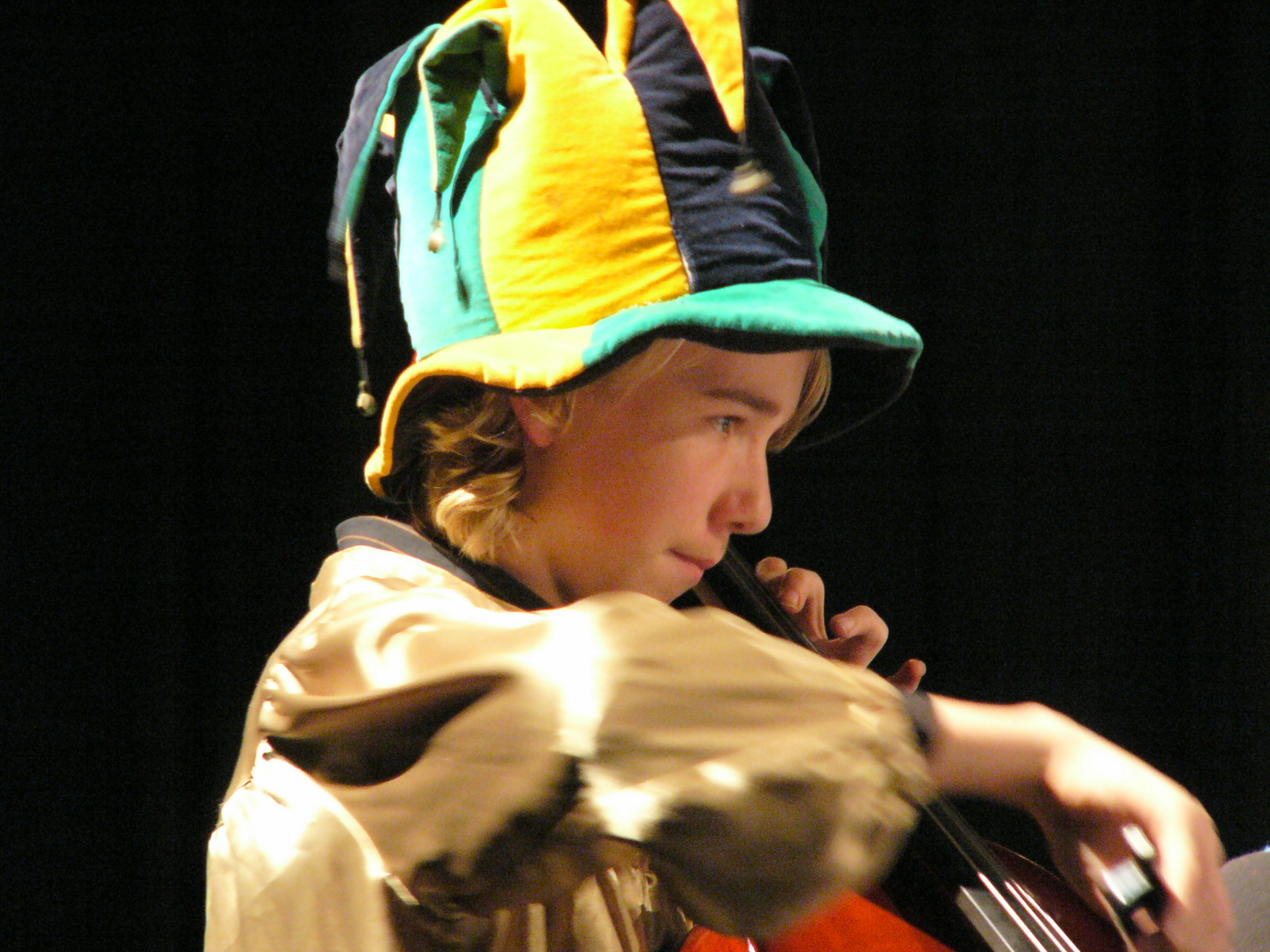
My brother as a young cellist at a music camp

My brother as a young cellist at a music camp

Have the radio on. Try listening to different stations and genres as opposed to Top 40 all the time.

Listen the soundtracks of your kids favourite movies (often there will be some orchestra involved). Talk about how the instruments create the mood of the piece.

Go see some live music: there are often free orchestra concerts (especially in the summer), see some chamber music or world music. Help your kid find their favourite performer on their instrument (a violin hero you always see when they’re in town)

Make some music friends:

–          Have a friend over who’s learning an instrument and muck around on your instruments together or learn a duet.

–          Get involved in a youth orchestra or string ensembles/concert band.

–          One of the most encouraging things for me growing up was going to music camps where I would meet a whole lot of people who were weird music kids just like me. The tutors were cool too and taught me from a different angle from what my violin teacher would.  Having friends who are into music will encourage your kid along like nothing else!

Music encouraging birthday or Christmas presents:

–          Sheet music (even better, make a trip to the music store and spend some time looking through the sheet music section),

–          CD’s,

–          Concert DVDs,

–          Tickets for concerts,

–          Music nerd t-shirts,

–          Fun instruments or instrument accessories.

Youtube the latest piece your child has been working on – look at a few different versions together and choose which one is your favourite!

Celebrate all sorts of music milestones:

–          Get a new dress to play for the recital,

–          Go out to the special bakery after a music exam,

–          Buy a small gift (like a CD) after doing an audition (those things are hard on the psyche!)

I remember my Mum gave me fifty dollars as a celebration of me learning ‘Meditation’ on the violin – it was my first “real” piece and I worked hard to memorise it. Learning an instrument can be tough work – create a culture where music is the thing that makes you feel special and your kid will never want to give up.

Go busking for charity (even more fun with friends and siblings)

Play at a nursing home (its ok, most of them are deaf)

Give money to buskers; ask them about how and why they learnt their instrument.

Mum/Dad’s/Grandparent’s birthday coming up? Get your kids to sneakily work out their favourite piece and learn it. Or write their own piece for them.

Fun bribes! My second cousins play violin and cello and when their grandfather said he’d give twenty dollars to whoever could learn how to play Amazing Grace first on their instrument it sparked a practice frenzy! Dare your kid to work out how to play their favourite song on their instrument.

Learn how to play the Brahms lullaby for a new baby brother/sister/cousin/neighbour

Learn how to play Happy Birthday – have everyone bring out the instruments as a family tradition to play celebrate birthdays (agree on a key first!)

If you go to church start getting involved in the music team – my husband had older musicians mentor him as he started out playing drums at his church. You won’t find a more forgiving environment!

Start a collection of all the songs they know so they have a go to book of “repertoire”. Scrapbook recital programmes, concert tickets. Make a music diary.

Learn some carols together to play for the family on Christmas (reminds me of the final scene of It’s a Wonderful Life’ where the little girl plays Harks the Herald Angels sing over and over and over and over)

A Violin Bucket List

I finished my Bachelor of Music halfway through this year. Since I was eight I’ve always had something to practice towards – all the AMEB exams, recitals, university exams and concerts. And now…it feels a bit like a free fall, especially as I’m not having lessons at the moment.

I want to keep growing, developing, exploring on my violin. But it can feel difficult when there are no clear markers to aim at.

So here’s a bucket list of various goals that go beyond what I’ve learnt on violin so far. They’re challenging enough to really develop as a creative and brave musician even without lessons!

  • Memorise a flashy fiddle tune – could be bluegrass, celtic or gypsy music. Something to show off at a party!
  • Learn ALL  42 of the Kreutzer studies and exactly what each one aims to teach. Think of some creative variations one could use to teach the same things.
  • Learn an entire Bach sonata or partita – all the movements (I’ve just got a Gigue to learn to have all of the G minor sonata!)
  • Pick a favourite concerto and learn all the movements (I don’t think I’m the only one who went through my entire undergrad only learning bits and pieces of concertos). Have a go at making up your own cadenza.
  • Using a loop pedal work out the bass, groove, harmony and melody of a classic pop/rock song. Layer up and record to Youtube.
  • Learn three songs from your cultural background. Arrange them three different ways for a beginner, intermediate and advanced players.
  • Learn something in scordatura! (Alternative tunings: there are fiddle pieces and baroque pieces that use scordatura)
  • Transcribe a solo from a recording you like. Transcribe a solo originally played by your instrument or try transcribing a solo from another instrument.
  • Write your own instrumental – you could try a theme and variations. Pick a theme that you like, or invent your own theme.
  • Listen to a 20th century/21st century composition written for your instrument. What’s something new about the way they use your instrument? Research any new techniques you hear them do (borrow the score from a library, read the liner notes etc) and work out how to play them yourself (perhaps add to theme and variations)

Have fun!

How do you challenge yourself to keep learning and developing?  Share your ideas in the comments section!

A Violin Set Up Poem

“There’s too many things to remember!” Kids often whinge when they’re learning violin. I think that there’s really two major points that fix a lot of elementary violin problems:

  • A “mouse-hole” (a circle of space between the thumb and first finger of the left hand) ensures the left hand is in the right position and is relaxed enough for the fingers to fall in a natural way.
  • Making sure the pinky is bent in the bow hold; it should sit on top of the flat part of the bow. This enables the bow to be straight, for there to be smooth changes and greater relaxation and control .

This week I’ve asked all the kids to memorise a little ditty I invented. I am going to be completely annoying and recite it to them every time they pick up the violin to play. Because for good habits to be installed a system check is in order!


Here’s the poem:


Violin up

Swing your elbow

Place your fingers

So they’re ready to go


Check your mouse-hole

Park your bow

Tap your pinky

And you’re ready to go!

My story so far…

Growing up as a girl who writes poetry and plays music (as opposed to playing netball) in a small country town (population: 100) people  means you’re used to standing out, to people not quite understanding your goals, to creatively finding solutions for under-resourced performing arts programs. It also means that I’ve had the opportunity to try my hand at many different things, such as debating, choreographing, starting a magazine. It gave me long hours to read books, write in diaries and practice my violin (and direct my brother in small plays of my own writing on the back verandah of our house).

My parents were always supportive of our creative endeavours – Mum being a primary school music teacher and Dad the only non-swearing shearer in the district (before he became a school chaplain). The country also teaches you to have more of an open heart to people you’ve just met (or maybe that’s just my natural naivety). I was lucky to have a top notch violin teacher who happened to fall in love with and marry a farmer so even though I lived in rural Victoria, I had quality tuition on my violin.

While I was growing up in Picola I couldn’t wait to get to the city and go to uni and get started on all my big plans. To be honest I haven’t really lost any of those plans, but I have learnt how to realistically go about them. I decided to study music, classical violin performance at the University of Melbourne. At first I really wasn’t sure why I did that, other than the fact that the violin was always something that I had done. I mean this was a course seemingly chock-a-block with child prodigies set and competitive violinists set on a full time orchestral job. My dreams were just as high but not in such a narrow field. I didn’t just want to play classical music, but have the skills and technique to play any genre of music from folk to jazz. And I didn’t just want to play violin even, but learn about voice. In fact in my degree I haven’t just played in the University Orchestra, string ensembles and solo recitals but I’ve been a theatre reviewer, costume designer, published poet, sung in the Ormond College Choir.

I find it hard to narrow down my interests and skills, but I believe that this is somewhat of a strength in this modern day and age where musicians are not only expected to be able to play their instruments, but teach and appear on television and write blogs. Doing a variety of things excites me and it is where I believe innovation lies, in being able to combine seemingly unrelated things in a fresh and exciting way.

My favorite project is my alternative folk band Rare Child. Here I get to bring together many of my interests: writing songs, singing and playing the violin. Not only that, but as a band just starting out in Melbourne I also have the role of manager, promoter, booking agent, web designer, treasurer and CEO.

This somewhat influenced me in choosing to do my third year ‘Careers in Music’ placement at SYN (Student Youth Network). I was interested, and it seemed important to, learn about the different mediums people experience music. Through this placement I have had hands on experience in both radio and television and those are things I will definitely continue creating.

In the future I see my life and career being a combination of many artistic projects and endeavours. It’s in the nature of the musician’s career that not only do you perform, but you manage your own events and teach others. Unlike some of my classmates I don’t know exactly what role I want to end up in, but I believe by continually learning skills, experiencing the world, creating and developing artistic projects, my path will open up day by day.